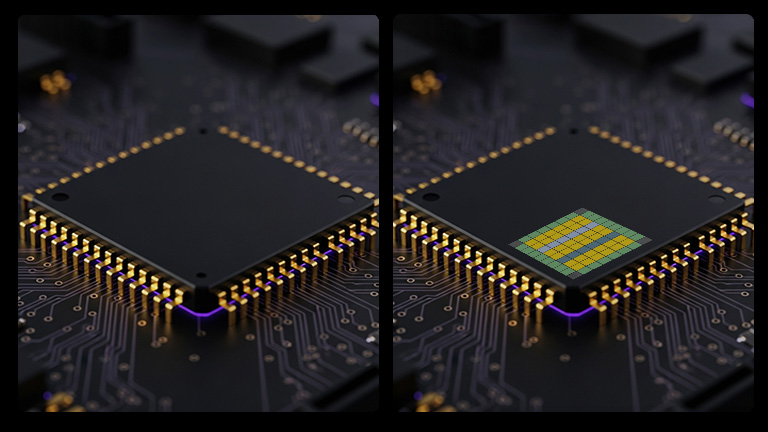
FPGAs vs. eFPGAs: Understanding the Key Differences

FPGAs vs eFPGAs

Summary: As chip architecture evolves toward heterogeneous SoCs and chiplets, engineers face a growing challenge: balancing flexibility with efficiency. Traditional FPGAs remain essential for rapid prototyping and field reconfigurability, but embedded FPGAs (eFPGAs) are increasingly becoming a smart choice for adding flexibility to ASIC and SoC devices. This article breaks down the key differences between […]

Read More… from FPGAs vs. eFPGAs: Understanding the Key Differences
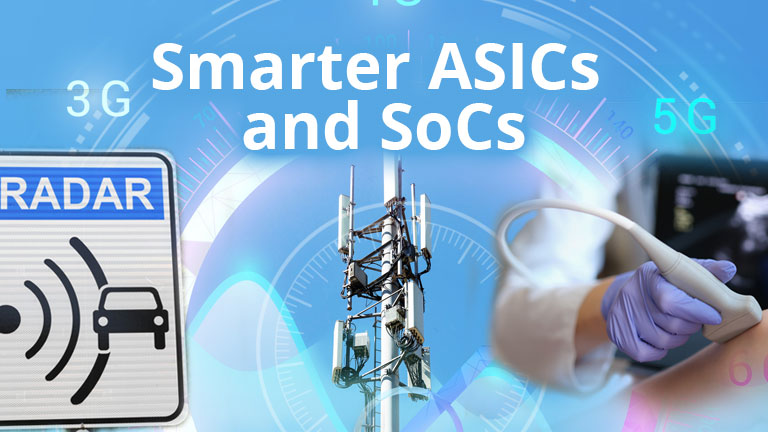
Smarter ASICs and SoCs: Unlocking Real-World Connectivity with eFPGA and Data Converters

Data converters are the gateways that connect the real (analog) world to the digital world. They are available as discrete devices, integrated into microcontrollers and FPGAs as well as licensable intellectual property (IP) in nearly all popular foundry process nodes.    With the explosion of AI processing at the edge and the rising cost of […]

Read More… from Smarter ASICs and SoCs: Unlocking Real-World Connectivity with eFPGA and Data Converters

ASICS versus FPGAs versus ASICs with eFPGA Technology

I am often asked about the differences between ASICs, FPGAs, and ASIC-with-embedded FPGA (eFPGA) blocks and so I thought I would devote a blog article to that topic. Here goes… Once upon a time, there were ASICs (“Application Specific Integrated Circuits”, for the uninitiated). These were (and are) semiconductor devices designed to implement a very […]

Read More… from ASICS versus FPGAs versus ASICs with eFPGA Technology